
A Journey of Friendship and Self-Discovery: An Indian in Taiwan
Arjun Mehta, a 32-year-old software engineer from Bengaluru, had always been captivated by East Asian cultures. When an opportunity arose to work in Taipei, he eagerly embraced the chance, envisioning a year filled with new experiences, friendships, and personal growth.
Upon landing at Taoyuan International Airport, Arjun was immediately struck by the seamless blend of modernity and tradition that characterized Taiwan. The efficient public transportation, the neon-lit streets juxtaposed with ancient temples, and the tantalizing aroma of street food all painted a picture of a society that honored its past while embracing the future.
His initial days were a whirlwind of settling into his new apartment in the bustling district of Xinyi, familiarizing himself with his workplace, and navigating the local markets. The language barrier posed challenges, but with the help of translation apps and the occasional English-speaking local, he managed to get by.
At his new office, Arjun was welcomed by his Taiwanese colleagues with polite smiles and courteous nods. The organizational culture was markedly different from what he was accustomed to in India. Meetings were structured and efficient, hierarchies were respected, and there was an unspoken emphasis on harmony and avoiding confrontation.
His immediate team consisted of individuals who were experts in their respective fields. There was Mei, a meticulous project manager with an eye for detail; Chen, a software developer known for his innovative solutions; and Li Wei, a systems analyst with a reputation for his analytical prowess.
While the team was collaborative during work hours, Arjun noticed that interactions remained strictly professional. Unlike his experiences in India, where colleagues often became friends and socialized outside of work, here, the boundaries between professional and personal life were demarcated.
As weeks turned into months, Arjun’s sense of isolation grew. He missed the camaraderie of his friends back home, the spontaneous weekend get-togethers, and the familial warmth that was an integral part of his life in India.
Determined to forge deeper connections, he decided to immerse himself in local culture. He enrolled in Mandarin classes at a nearby community center, hoping that breaking the language barrier would help bridge the gap. He also joined a Tai Chi group that practiced in Daan Forest Park every morning, seeking both physical wellness and social interaction.
Despite his efforts, the relationships he formed remained superficial. His classmates were friendly but distant, and his Tai Chi peers, though polite, seldom engaged in conversations beyond pleasantries.
One evening, after a particularly solitary weekend, Arjun mustered the courage to approach Li Wei, the colleague he felt closest to. Over a cup of oolong tea in the office pantry, he broached the subject.
“Li Wei,” Arjun began hesitantly, “I’ve been here for several months now, and while everyone has been welcoming, I feel there’s a certain distance. I was wondering if there’s something I’m not understanding about the culture here.”
Li Wei looked thoughtful, then replied, “Arjun, Taiwanese culture places a strong emphasis on privacy, especially concerning one’s home. Inviting someone over is considered a significant gesture, usually reserved for close family and long-term friends. It’s not a reflection of our feelings towards you but rather a cultural norm.”
Arjun nodded, absorbing the information. “I see. In India, it’s quite common to invite friends and even acquaintances home. I guess I didn’t realize the norms were so different here.”
Li Wei smiled gently. “Every culture has its nuances. It’s all about understanding and respecting them.”
While Li Wei’s explanation provided some clarity, Arjun couldn’t shake off the feeling that there was more beneath the surface. He had read about the historical contexts that shaped various cultures and wondered if there were historical perceptions influencing his interactions.
He decided to delve deeper into Taiwan’s history and its interactions with other nations. He learned about Taiwan’s colonial past, its struggles for identity, and its efforts to maintain sovereignty amidst powerful neighbors. He also explored India’s history, reflecting on its colonial past and the internal conflicts that had shaped its societal structures.
Armed with this newfound knowledge, Arjun sought another conversation with Li Wei. This time, they met at a quaint tea house in Jiufen, a town known for its rich history and scenic views.
“Li Wei,” Arjun began, “I’ve been reading about our respective histories and was wondering if historical events influence how Taiwanese perceive foreigners, especially Indians.”
Li Wei paused, choosing his words carefully. “History does shape perceptions, Arjun. While Taiwan doesn’t have a direct colonial history with India, there’s a general awareness of historical events. For instance, during British colonial rule in India, there were instances where Indians served in positions that enforced colonial policies. Some might view this as a form of betrayal against one’s own people.”
Arjun was taken aback. “But that was a complex period. Many were coerced or had limited choices.”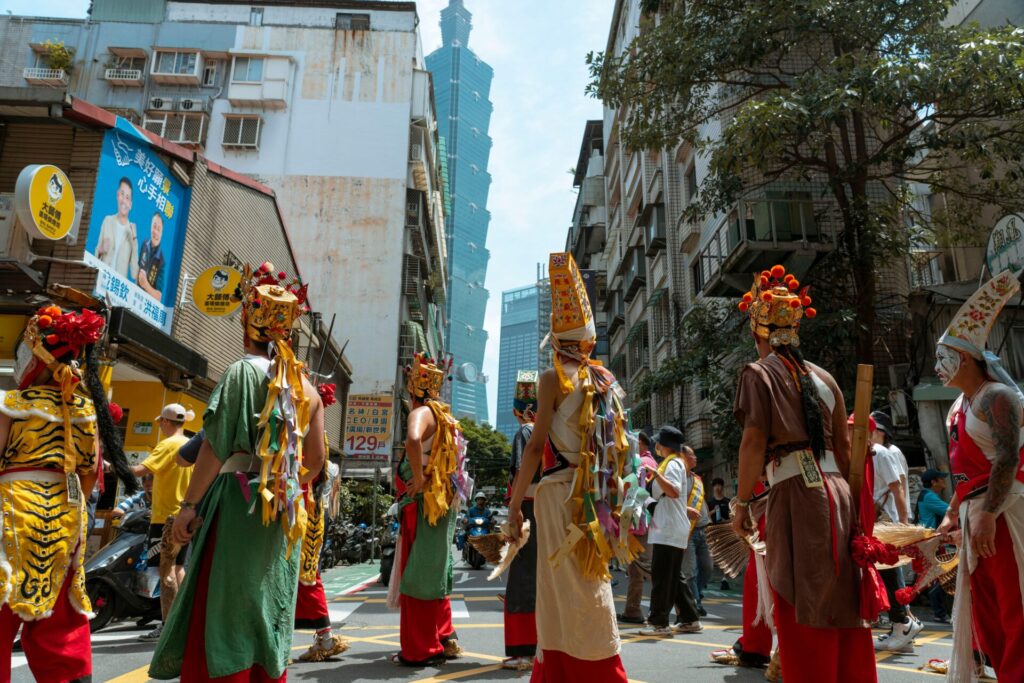
“True,” Li Wei acknowledged. “But historical narratives can be oversimplified, leading to generalized perceptions. It’s essential to understand these nuances to bridge cultural gaps.”
That evening, back in his apartment, Arjun pondered over their conversation. He realized that while he had been viewing his experiences through his cultural lens, there was a whole spectrum of perspectives he hadn’t considered.
He thought about the Indian soldiers who had served under British command, the princely states that had allied with colonial powers, and the internal divisions that had been exploited during colonial rule. He understood that these historical events, though complex, could be perceived as instances of internal betrayal.
He also reflected on Taiwan’s history, its struggles against external domination, and its efforts to preserve its cultural identity. He realized that a nation that had fought hard to maintain its sovereignty might view any form of internal betrayal, even in another country’s history, with disdain.
With this deeper understanding, Arjun decided to approach his interactions differently. He initiated open conversations with his colleagues about history, culture, and personal experiences. He shared stories from India’s struggle for independence, highlighting the resilience and unity that had eventually led to freedom. He also expressed his admiration for Taiwan’s rich cultural heritage and its people’s determination to preserve it.
He organized cultural exchange sessions at the office, where he introduced his colleagues to Indian festivals, music, and cuisine. He cooked traditional dishes for them, explaining the significance behind each recipe. In return, he eagerly participated when his colleagues shared aspects of Taiwanese culture with him.
Over time, these initiatives began to bear fruit. His colleagues started to open up more, sharing their own stories and experiences. The initial distance gave way to mutual respect and understanding.
One day, Li Wei approached Arjun with an invitation. “Arjun, my family is celebrating the Mid-Autumn Festival this weekend. We’d be honored if you could join us.”
Arjun was touched. He knew that being invited to a Taiwanese family’s home, especially during such an important festival, was a significant gesture of acceptance and friendship.
The Mid-Autumn Festival, also known as the Moon Festival, is one of Taiwan’s most cherished celebrations. Traditionally, it involves family gatherings, moon gazing, and sharing mooncakes—pastries symbolizing unity and togetherness. In recent years, barbecuing has become a popular activity during the festival, with families and friends coming together to enjoy grilled delicacies under the full moon.
On the evening of the festival, Arjun arrived at Li Wei’s home, a modest yet warmly decorated apartment in the heart of Taipei. The aroma of grilled meats and the sound of laughter filled the air. Li Wei’s family welcomed him with open arms, making him feel like a part of their family.
They gathered on the balcony, where a small barbecue grill was set up. As they prepared various meats and vegetables, Li Wei explained the significance of the festival and the customs they observed. Arjun learned that eating pomelos was also a tradition during this time, as the Chinese term for pomelo sounds like “care and protection.”
After the meal, they shared mooncakes, and Li Wei’s grandmother recounted the legend of Chang’e, the moon goddess. According to the myth, Chang’e drank an elixir of immortality and ascended to the moon, where she resides to this day.
As the full moon illuminated the night sky, they sat together, sharing stories and enjoying each other’s company. Arjun felt a profound sense of belonging and realized that the bonds they had formed transcended cultural differences.
Following the Mid-Autumn Festival, Arjun noticed a positive shift in his relationships at work. His colleagues seemed more open and engaged, inviting him to join them for lunches and weekend outings. He reciprocated by introducing them to Indian customs and traditions, organizing a small Diwali celebration at his apartment, complete with traditional sweets and decorations.
These exchanges enriched their understanding of each other’s cultures and fostered a sense of camaraderie within the team. Arjun and his colleagues began to appreciate the diversity that each person brought to the table, leading to more collaborative and innovative work dynamics.
As his year in Taiwan drew to a close, Arjun reflected on his journey. The initial feelings of isolation and cultural misunderstandings had transformed into deep friendships and personal growth. He had learned the importance of empathy, open-mindedness, and the willingness to step out of one’s comfort zone.
He realized that while cultural differences could pose challenges, they also offered opportunities for learning and connection. By embracing these differences and seeking to understand the perspectives of others, he had enriched his own life and the lives of those around him.
On his final day in Taipei, Arjun met with Li Wei and his family for a farewell dinner. They reminisced about the experiences they had shared and the memories they had created. As they parted ways, Li Wei handed Arjun a small box.
“Open it when you’re on the plane,” he said with a smile.
Later, as Arjun settled into his seat on the flight back to India, he opened the box to find a beautifully crafted mooncake and a note that read:
“To our dear friend Arjun,
May the light of the moon guide you on your journey, and may our paths cross again.
With love,
Li Wei and family”
Tears welled up in Arjun’s eyes as he realized the profound impact of his time in Taiwan. He had arrived seeking new experiences and had left with a deeper understanding of humanity and the enduring power of friendship.
Disclaimer: This is a fictional story crafted to explore themes of cultural misunderstandings and historical perceptions. Any resemblance to real persons or events is purely coincidental.

You May Also Like

The Chai Cafe Chronicles: One Man’s Quirky Quest for Joy

Makeup Bag Essentials: Must-Have Products for a Flawless Look
