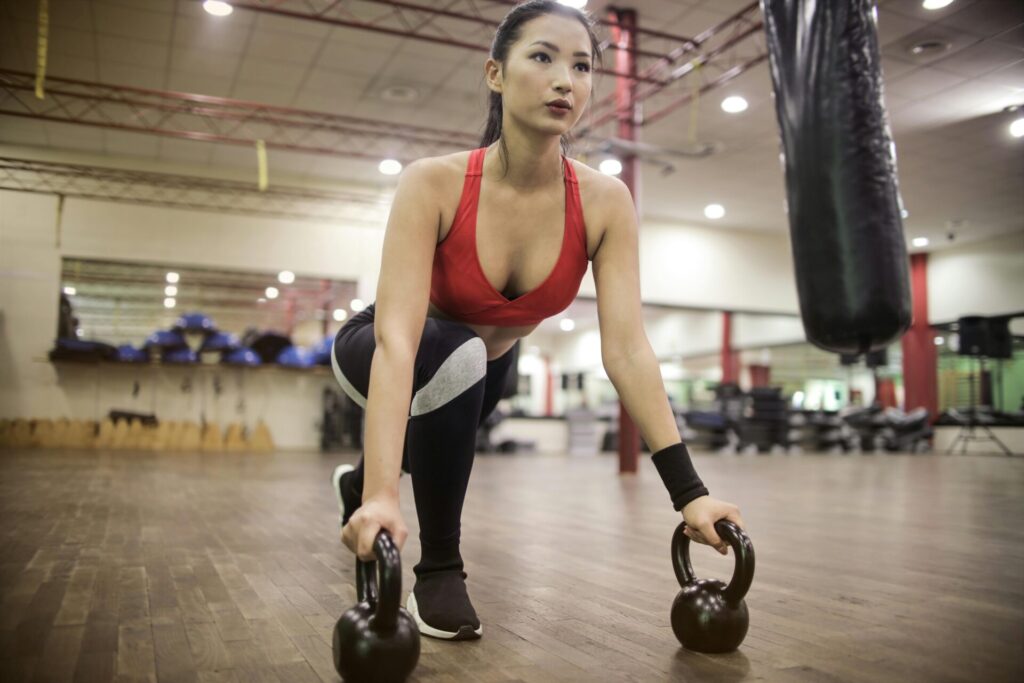
Imagine standing in a gym filled with fancy machines and complex equipment, enough to fill a warehouse. Now, picture condensing all that power into a single cast-iron ball with a handle. That’s what a kettlebell offers—a portable gym that combines strength, conditioning, flexibility, and power into one compact package.
If you’re tired of lengthy gym sessions that separate cardio days from strength days, kettlebell training might just be your fitness salvation. These cannonball-shaped weights with handles have been building powerful bodies since the 1700s in Russia, where they were originally used as counterweights for market scales. Little did those Russian farmers know they were handling what would become one of the most versatile fitness tools on the planet.
Today, kettlebells are everywhere – from CrossFit boxes to home gyms, from elite athletic training facilities to physical therapy clinics. Their surge in popularity isn’t just another fitness fad; it’s because these simple tools deliver complex results.
Let’s break down the benefits, dive into killer kettlebell moves, and build a fun, do-anywhere routine that gives you both strength and conditioning in one dynamic package.
What Exactly Is a Kettlebell?
A kettlebell is a round cast-iron or steel weight with a flat bottom and a curved top handle. Unlike dumbbells, where the weight is evenly distributed on both sides of your hand, a kettlebell’s offset design forces your body to stabilize during movement, activating more muscles.
This quirky shape means your body has to work harder to control the bell—translating into more strength, more balance, and more calories burned. You’ll see improvements in core stability, grip strength, and coordination all while getting a killer cardio session.
The Science Behind Kettlebell Training
What makes kettlebells different from dumbbells, barbells, or machines? It all comes down to physics and functional movement patterns.
Unlike symmetrically weighted dumbbells, kettlebells have an offset center of gravity. That uneven weight distribution forces your body to work harder to stabilize during every movement. This constant stabilization requirement engages your core, improves your balance, and recruits more muscle fibers than conventional weight training.
Scientific research backs up the effectiveness of kettlebell training:
A study published in the Journal of Strength and Conditioning Research found that kettlebell swings produced similar cardiovascular demands to uphill treadmill running.
Research from the American Council on Exercise discovered that a 20-minute kettlebell workout can burn up to 20 calories per minute, equivalent to running a 6-minute mile pace.
Another study showed that just 10 weeks of kettlebell training improved maximal and explosive strength by 15% and 20%, respectively.
When you swing, clean, or snatch a kettlebell, you’re not just moving weight from point A to point B – you’re creating ballistic force, absorbing momentum, and channeling energy through your entire kinetic chain. This dynamic quality of kettlebell exercises means you’re simultaneously building strength while elevating your heart rate and improving your cardiovascular fitness.
Benefits of Kettlebell Training
You’d be amazed how much benefit one kettlebell can provide. Here’s why fitness lovers can’t stop raving about it:
1. Time-Efficient Total Body Conditioning
With traditional workout splits, you might spend an hour on legs, another on chest and triceps, another on back and biceps, and then separate cardio sessions. Kettlebell training obliterates this compartmentalized approach.
A properly designed kettlebell circuit can hit every major muscle group while simultaneously keeping your heart rate elevated, effectively combining strength training and cardio into one time-efficient package. In just 20-30 minutes, you can complete a workout that would otherwise take 60-90 minutes with conventional methods.
2. Functional Strength That Translates to Real Life
When was the last time you needed to lie on your back and push something directly above your chest in real life? Probably rarely. But how often do you need to lift something from the ground, carry heavy objects, or generate power from your hips? Almost daily.
Kettlebell exercises mimic natural movement patterns that your body performs in everyday activities. The strength you build isn’t just for show – it’s practical strength that translates directly to improved performance in daily life, from carrying groceries to playing with your kids.
3. Improved Core Stability Without Endless Crunches
Forget countless sit-ups and crunches. Nearly every kettlebell exercise forces your core to engage as a stabilizer. The offset weight challenges your balance and requires your abdominal muscles, obliques, and lower back to work constantly to maintain proper positioning.
This indirect core training is often more effective than isolation exercises because it teaches your core muscles to function as they’re designed to – as stabilizers that transfer force between your upper and lower body.
4. Joint-Friendly Conditioning
High-impact activities like running can be tough on your joints, especially as you age or if you’re carrying extra weight. Kettlebell exercises offer a low-impact alternative that still delivers high-intensity cardiovascular benefits.
The ballistic nature of kettlebell swings and other dynamic movements elevates your heart rate while the weight-bearing aspect strengthens bones and connective tissues without the repetitive impact of running or jumping.
5. Enhanced Mobility and Flexibility
Many kettlebell movements require a full range of motion at multiple joints. The kettlebell swing, for example, demands hip mobility; the Turkish get-up requires shoulder stability and thoracic spine mobility; kettlebell windmills develop hamstring flexibility and spinal rotation.
Regular kettlebell practice naturally improves your mobility and flexibility through dynamic movement patterns rather than static stretching alone.
Kettlebell workouts deliver significant mental health benefits too:
The meditative quality of rhythmic movements like the swing
The confidence that comes from mastering challenging techniques
The endorphin release from high-intensity training
The mindfulness required to maintain proper form
The satisfaction of tangible progress and achievement
Essential Kettlebell Exercises for Beginners
Before diving into complete workouts, let’s cover some fundamental kettlebell exercises that form the foundation of effective training:
1. Kettlebell Swing: The King of Kettlebell Exercises
The swing is the cornerstone of kettlebell training, and mastering it first will set you up for success with more advanced movements.
How to perform a proper kettlebell swing:
Stand with feet slightly wider than shoulder-width apart, toes pointing slightly outward.
Place a kettlebell on the ground about a foot in front of you.
Hinge at your hips (not your knees) to reach down and grab the kettlebell with both hands.
Pull the kettlebell back between your legs like you’re hiking a football.
Explosively drive your hips forward, squeezing your glutes and letting the momentum carry the kettlebell up to chest height.
Allow the kettlebell to fall naturally, controlling its descent as you hinge at the hips again.
Repeat the movement in a continuous, fluid motion.
Common mistakes to avoid:
Squatting instead of hinging
Using your arms to lift the kettlebell (your arms should just be connectors)
Rounding your back (keep it flat throughout the movement)
Not fully extending your hips at the top of the swing
2. The Goblet Squat: Lower Body Strength Builder
Muscles worked: Quads, glutes, core
How to perform:
Hold a kettlebell by the horns (the sides of the handle) close to your chest.
Stand with feet shoulder-width apart or slightly wider.
Keeping your chest up and core tight, sit back and down as if sitting into a chair.
Descend until your thighs are at least parallel to the ground, ideally with your elbows touching the inside of your knees.
Drive through your heels to stand back up, squeezing your glutes at the top.
3. The Turkish Get-Up: The Ultimate Full-Body Coordination Exercise
Muscles worked: Full body
This complex movement involves moving from lying flat on your back to standing while holding a kettlebell overhead. It develops shoulder stability, core strength, and total body coordination. For beginners, practice the movement pattern without weight before adding a kettlebell.
4. The Kettlebell Clean: From Ground to Rack Position
Muscles worked: Shoulders, traps, core
The clean brings the kettlebell from the ground to the “rack” position at your shoulder, building explosive hip power and grip strength.
5. The Kettlebell Press: Upper Body Strength Developer
Muscles worked: Lats, traps, biceps
From the rack position, press the kettlebell overhead while maintaining core stability and proper alignment.
Equipment needed: One medium-weight kettlebell (women might start with 8-12kg, men with 12-16kg)
Complete as many rounds as possible in 15 minutes:
10 Kettlebell Swings
10 Goblet Squats
5 Push-ups (modify as needed)
30-second Rest
Workout 2: The Strength and Conditioning Circuit
Equipment needed: One kettlebell. Complete 3-5 rounds with 60-second rest between rounds:
15 Kettlebell Swings
10 Goblet Squats
5 Kettlebell Rows (each side)
10 Kettlebell Halos (5 each direction)
Workout 3: The Tabata Kettlebell Burner
Equipment needed: One kettlebell Complete 8 rounds of 20 seconds work, 10 seconds rest for each exercise:
Kettlebell Swings
Rest 1 minute
Kettlebell Goblet Squats
Rest 1 minute
Kettlebell Russian Twists
Rest 1 minute
Kettlebell Push Press
Progressing Your Kettlebell Practice: Intermediate Techniques
Once you’ve mastered the basics, it’s time to level up your kettlebell game with these intermediate exercises and techniques:
1. Double Kettlebell Training
Using two kettlebells simultaneously increases the load and challenge. Try these double kettlebell exercises:
Double Kettlebell Swings
Double Kettlebell Front Squats
Double Kettlebell Clean and Press
2. Flow Training
Kettlebell flows connect multiple exercises in a continuous sequence without setting the weight down. This approach enhances cardiovascular conditioning and builds muscular endurance. A simple flow might be:
Clean the kettlebell to the rack position
Perform a squat
Press the kettlebell overhead
Lower to rack position
Perform a reverse lunge
Return to the starting position
Repeat on the opposite side
3. Bottoms-Up Training
Holding the kettlebell upside down (handle down, bell up) significantly increases the stability challenge, requiring intense grip strength and motor control. Try bottom-up holds, carries, or even presses to enhance your neuromuscular coordination.
Advanced Kettlebell Training: For Seasoned Enthusiasts
Ready to push your limits? These advanced kettlebell exercises separate the enthusiasts from the masters:
1. The Kettlebell Snatch
The snatch brings the kettlebell from the ground to overhead in one fluid motion, demanding explosive power and precise technique.
2. The Kettlebell Windmill
This challenging movement involves holding a kettlebell overhead while hinging sideways toward the floor, testing your stability, mobility, and core strength.
3. One-Arm Long Cycle
Combining the clean and jerk into a continuous cycle, this movement is a staple in kettlebell sport competitions and delivers exceptional cardiovascular and strength benefits.
Creating Your Custom Kettlebell Workout Plan
The beauty of kettlebell training lies in its versatility and adaptability. Here’s how to design a kettlebell program based on your specific goals:
For Weight Loss and Fat Burning:
Focus on high-repetition, full-body movements with minimal rest:
Higher rep ranges (15-20 per set)
Circuit-style training
Short rest periods (30 seconds or less)
Interval training protocols like Tabata or EMOM (Every Minute On the Minute)
For Strength Building:
Emphasize heavier weights and progressive overload:
Lower rep ranges (5-10 per set)
Longer rest periods (60-90 seconds)
Focus on fundamental strength movements like squats, presses, and pulls
Focus on power exercises like swings, cleans, and snatches
Include unilateral (single-sided) exercises for balance development
Vary tempo and intensity
Common Kettlebell Mistakes and How to Avoid Them
Even experienced fitness enthusiasts can fall prey to these common kettlebell errors:
Mistake 1: Using Momentum Instead of Muscles
Solution: Focus on controlling the kettlebell throughout the entire range of motion, especially during the negative (lowering) phase.
Mistake 2: Starting Too Heavy
Solution: Master the technique with lighter weights before progressing. You can perform effective workouts even with lighter kettlebells when using proper form.
Mistake 3: Poor Breathing Techniques
Solution: Synchronize your breathing with your movements. Generally, exhale during exertion (lifting phase) and inhale during the relaxation phase.
Mistake 4: Neglecting Proper Warm-Up
Solution: Always prepare your body with dynamic movements that mimic the exercises you’ll be performing but with lower intensity.
Kettlebell Training for Special Populations
Kettlebells for Women
Contrary to outdated myths, kettlebell training will not make women “bulky.” Instead, it promotes lean muscle development, improved posture, and functional strength. Many women find kettlebell training particularly effective for targeting commonly desired areas like the glutes, thighs, and core.
Kettlebells for Seniors
With appropriate weight selection and modified movements, kettlebell training can be remarkably beneficial for seniors. Focus on controlled movements, proper form, and exercises that improve balance and functional strength.
Kettlebells for Rehabilitation
Under professional guidance, kettlebells can be excellent tools for rehabilitation. Their versatility allows for graduated resistance and controlled movement patterns that can help rebuild strength after injury.
Integrating Kettlebell Training with Other Fitness Modalities
Kettlebell training complements virtually any fitness regimen:
1. With Traditional Strength Training:
Use kettlebells for dynamic warm-ups or as finishers after your main strength work.
2. With Cardio:
Replace some steady-state cardio sessions with kettlebell interval training for a metabolic boost.
3. With Yoga or Pilates:
Kettlebell exercises can enhance the strength components that support your practice of these mindful movement disciplines.
Nutrition Tips to Support Your Kettlebell Training
Fuel your kettlebell workouts properly with these nutritional guidelines:
Consume adequate protein (1.6-2.2g per kg of bodyweight) to support muscle recovery and growth
Don’t fear carbohydrates – they’re essential for high-intensity kettlebell training
Time your nutrition around your workouts – consider a small carb/protein meal 1-2 hours before training
Hydrate properly before, during, and after workouts
You don’t need much to begin your kettlebell journey:
Weight Suggestions:
Beginners: Women: 8–12 kg (18–26 lbs) Men: 12–16 kg (26–35 lbs)
Intermediate to Advanced: Women: 12–16 kg Men: 16–24 kg
A flat, non-slippery surface with enough space to swing safely
Comfortable, supportive footwear (or go barefoot if comfortable)
For Home Gym Setup:
Consider a set of 2-3 kettlebells of increasing weights to allow for progression. Start light, focus on form, then gradually increase weight.
Conclusion
Kettlebell training represents the perfect fusion of strength and conditioning in one simple yet powerful tool. From improving cardiovascular fitness to building functional strength, enhancing mobility, and saving precious time, kettlebells deliver results that few other training methods can match. Whether you’re a fitness novice or a seasoned athlete, kettlebells offer scalable challenges that can transform your body and mind.
The beauty of kettlebell training lies in its simplicity and effectiveness. You don’t need fancy equipment or complicated routines—just a single kettlebell and the willingness to learn proper technique can set you on the path to total-body transformation. So grab a kettlebell, cue up your favorite playlist, and swing your way to a fitter, stronger, and more energized you. Your future self will thank you.
Have you tried kettlebell workouts before? What’s your favorite kettlebell exercise? Share your experiences in the comments below, and let’s swing our way to fitness together!