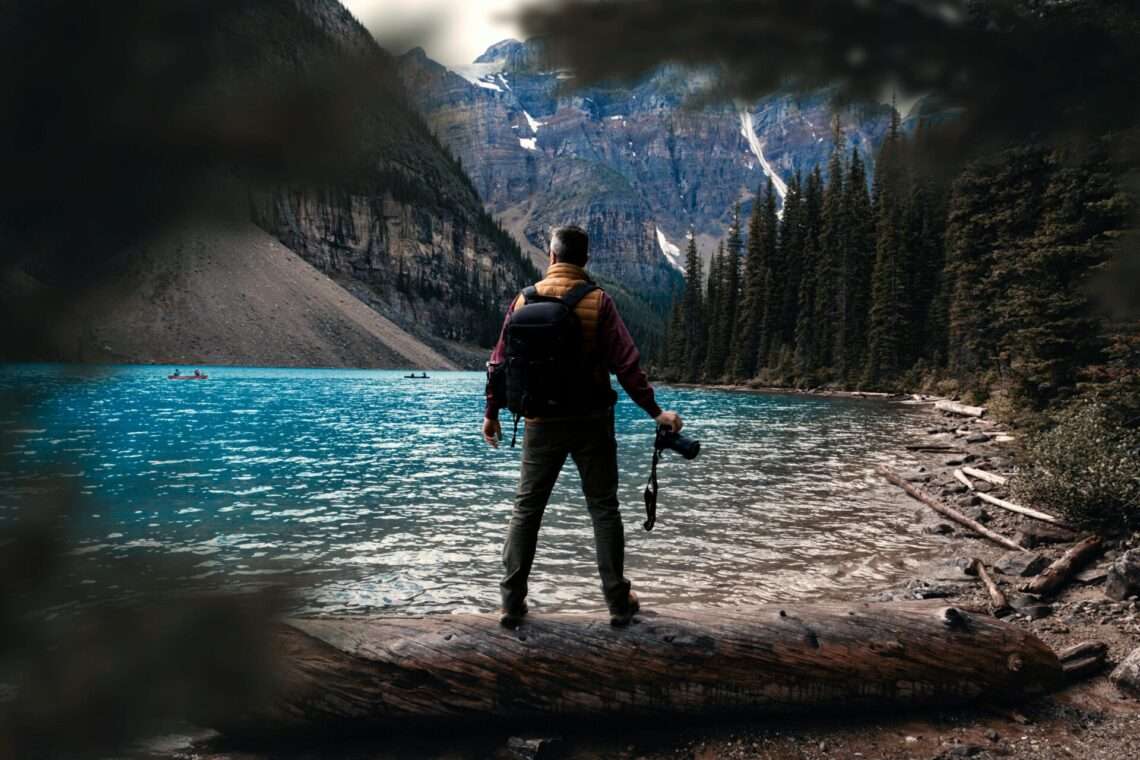
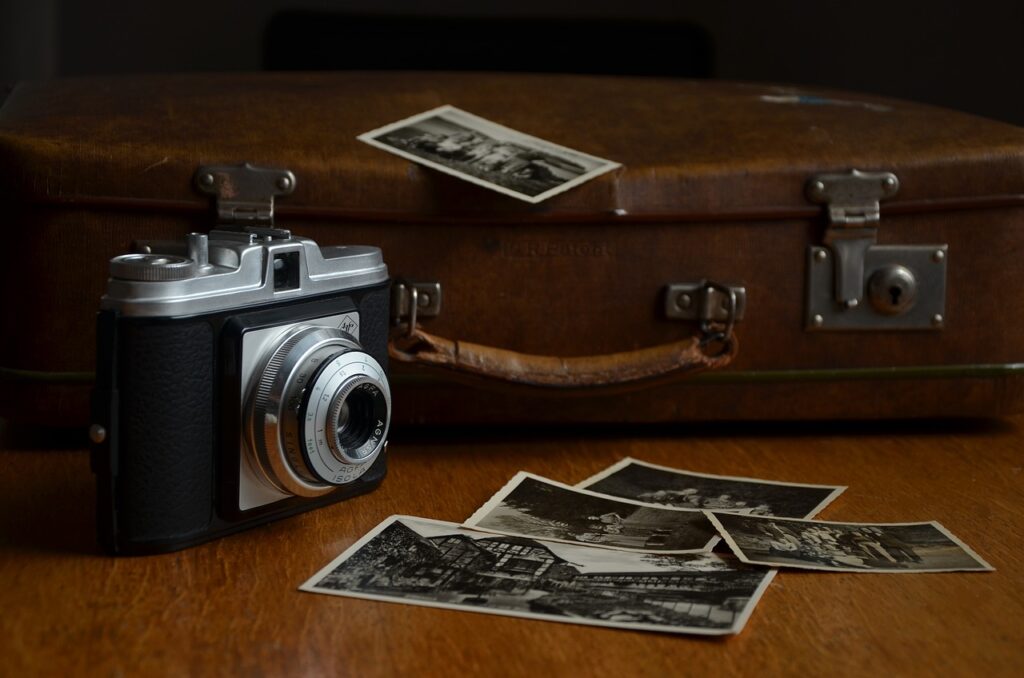
Traveling to new destinations brings the thrill of exploration and the joy of discovering new cultures, landscapes, and experiences. Whether you’re planning a tropical getaway, a mountain expedition, or a cultural immersion in a bustling city, one thing is certain: you’ll want to capture those precious moments.
In today’s digital age, travel photography has become an essential part of any journey. Not only does it allow us to preserve our memories, but it also enables us to share our experiences with friends, family, and even the world through social media.
But let’s face it – not all travel photos are created equal. We’ve all seen those breathtaking images on Instagram that make us wonder, “How did they capture that?” Well, you’re in luck! This comprehensive blog will walk you through everything you need to know about taking stunning travel photos, as well as the practical tips and techniques to help you capture breathtaking travel photos.
Why Travel Photography Matters
Travel photos are more than just pretty pictures – they’re windows into different cultures, landscapes, and experiences. They allow us to:
Preserve memories: Photos help us remember the sights, sounds, and emotions of our travels long after we’ve returned home.
Share experiences: Through our images, we can transport others to the places we’ve been and inspire them to explore the world.
Tell stories: Each photo has the power to convey a unique narrative about the people, places, and moments we encounter on our journeys.
Develop creativity: Travel photography challenges us to see the world in new ways and express our unique perspectives.
Let’s explore how you can take your skills to the next level and create truly stunning images on your next adventure now that we understand the significance of travel photography.
Essential Gear for Travel Photography
While it’s true that the best camera is the one you have with you, having the right gear can significantly improve your travel photography. Here’s a list of essential equipment to consider:
Camera:Choose a camera that suits your needs and budget. Options include:
DSLR cameras: Offer excellent image quality and versatility
Mirrorless cameras: Compact and lightweight with great image quality
Point-and-shoot cameras: Easy to use and portable
Smartphone cameras: Always accessible and increasingly capable
Lenses: If you’re using an interchangeable lens camera, consider bringing:
Wide-angle lens: Great for landscapes and architecture
Standard zoom lens: Versatile for everyday shooting
Telephoto lens: Ideal for wildlife and distant subjects
Tripod: A lightweight, travel-friendly tripod can help you capture sharp images in low light and create long exposures.
Memory cards: Pack plenty of high-capacity, fast memory cards to store your photos.
Extra batteries and charger: Don’t miss a shot because of a dead battery.
Camera bag: Protect your gear with a comfortable, weather-resistant bag.
Cleaning kit:Keep your lens and sensor clean for the best image quality.
If you want to take great photos, you don’t need the fanciest equipment. Learn to use the tools you have effectively, and upgrade them as your skills and needs change.
Mastering Camera Settings for Travel Photography
Understanding your camera’s settings is crucial for capturing stunning travel photos. Here are the key settings to focus on:
Exposure triangle:
Master the relationship between aperture, shutter speed, and ISO to control exposure.
Aperture: Controls depth of field (f/1.8 for blurry backgrounds, f/11 for sharp landscapes)
Shutter speed: Affects motion blur (1/1000s to freeze action, 1/30s or slower for light trails)
ISO: Adjusts light sensitivity (low ISO for bright conditions, high ISO for low light)
Shooting modes:
Aperture Priority (A or Av): You set the aperture, camera chooses shutter speed
Shutter Priority (S or Tv): You set the shutter speed, camera chooses the aperture
Manual (M): You control all settings for complete creative control
Auto: Camera chooses all settings (useful when you need to shoot quickly)
White balance:
Adjust to match the color temperature of the light source for accurate colors.
Focus modes:
Single-shot AF: For stationary subjects
Continuous AF: For moving subjects
Manual focus: For precise control or in challenging lighting conditions
Metering modes:
Evaluative/Matrix: Analyzes the entire scene
Center-weighted: Emphasizes the center of the frame
Spot: Measures a small area for precise exposure control
Experiment with these settings to understand how they affect your images. With practice, you’ll develop an intuitive sense of which settings to use in different situations.
Composition Techniques for Stunning Travel Photos
Great composition can transform an ordinary scene into an extraordinary photograph. Here are some composition techniques to enhance your travel photos:
Rule of thirds: The rule of thirds is a fundamental principle in photography composition. Imagine dividing your frame into a 3×3 grid. Positioning your subject along these lines or at their intersections can create a balanced and visually appealing photo.
Leading lines: Leading lines guide the viewer’s eye through the photo, creating a sense of depth and direction. Roads, rivers, and architectural elements can all serve as leading lines that draw attention to the main subject.
Framing: Using natural frames, such as archways, windows, or foliage, can add context and depth to your photos. Framing helps to isolate the subject and focus the viewer’s attention.
Symmetry and patterns: Our brains are naturally drawn to order and repetition. Using symmetry and patterns in your photos can create a sense of balance and harmony, or it can be used to create a dynamic and energetic feel.
Foreground interest: The foreground element can add depth to your image and draw the viewer’s eye into the scene. It can also provide context about the subject and location of your photo.
Perspective: Experimenting with different angles can completely change the feeling of your photo. A low angle can make a subject look more powerful, while a high angle can make it seem smaller or insignificant..
Balance: Balance in a photo creates a sense of stability and order. This doesn’t necessarily mean that everything needs to be perfectly symmetrical, but that the visual weight of the elements in your frame is evenly distributed.
Negative space: Negative space refers to the empty areas in your photo. While it might seem counterintuitive, negative space is important for creating a sense of calm and emphasizing your main subject. Don’t be afraid to have empty areas in your frame. They can help to draw attention to the parts of the photo that you want the viewer to focus on.
Golden ratio: The golden ratio is a mathematical principle that has been used in art and design for centuries. It’s a ratio of roughly 1:1.618, and it’s believed to be especially pleasing to the human eye. While not a hard-and-fast rule, using the golden ratio to position your main subject in your frame can create a more aesthetically pleasing composition. There are many tools available online to help you frame your shots according to the golden ratio.
Breaking the rules: Once you understand these basic principles of composition, don’t be afraid to experiment and break the rules! Sometimes the most interesting photos are those that defy convention. Use your creativity and see what you can come up with.
Composition is subjective, so trust your instincts and experiment with different approaches to find what works for each scene.
Lighting Tips for Travel Photography
Lighting can make or break a photograph. Here’s how to work with different lighting conditions to create stunning travel photos:
Golden hour: The golden hour, shortly after sunrise and before sunset, provides soft, warm lighting that is ideal for photography. This time of day enhances colors and adds a magical quality to your photos.
Blue hour: The blue hour, just before sunrise and after sunset, offers a different kind of beauty. The soft, diffused light creates a serene atmosphere, perfect for capturing landscapes and cityscapes.
Harsh midday sun: Midday sunlight can be harsh and create strong shadows. If you must shoot during this time, look for shaded areas or use a reflector to diffuse the light.
Overcast days: Overcast skies provide beautiful, diffused light that’s perfect for portraits. It eliminates harsh shadows and creates a flattering, even light on your subject’s face. This is a great time to photograph people with softer features or those who might be bothered by bright sunlight.
Night photography: When shooting at night, everything gets darker, requiring slower shutter speeds. A tripod is essential to keep your camera steady and avoid blurry images. With a long exposure and a tripod, you can capture the movement of light sources like city lights or stars. This creates stunning light trails that add a sense of movement and time to your photos.
Indoor lighting: Indoor lighting can be tricky because it can cast a yellow or artificial hue on your photos. Adjusting your white balance setting (often labeled “cloudy” or “tungsten”) will help ensure your photos have accurate colors. Low indoor light often requires a higher ISO setting on your camera, which can introduce grain. Experiment with finding a balance between ISO and shutter speed to get a clear image without too much grain. If necessary, use a flash to add extra light to your subject.
Backlighting: Backlighting, where the light source is behind your subject, can create dramatic silhouettes. This works well for photos of people, animals, or interesting shapes against a bright background. If you want to avoid silhouettes and show more detail in your backlit subject, use a fill flash to add light to the front of your subject.
Side lighting: Side lighting is great for landscapes and portraits because it emphasizes texture and form. This creates shadows that define the shapes and details in your photo.
Reflectors: A reflector, which can be a whiteboard or even a silver car, can be used to bounce natural light back onto your subject. This is a great way to fill in shadows and brighten your photos, especially on overcast days or in open shade.
Artificial lighting: Don’t be afraid to use city lights, neon signs, or other creative light sources to create unique effects in your photos. These can add color, drama, and a sense of place to your nighttime or indoor shots.
When you understand how light affects your images, you can adapt to any lighting situation and capture memorable travel images.
Capturing Different Types of Travel Photos
Travel photography encompasses a wide range of subjects and styles. Here’s how to approach different types of travel photos:
Landscape photography
Use a wide-angle lens for sweeping vistas
Include foreground elements for depth and scale
Consider using filters (polarizer, neutral density) for enhanced effects
Shoot during golden hour for dramatic lighting
Street photography
Be discreet and respectful of local customs
Use a prime lens for quick focusing and a wider aperture
Capture candid moments and interesting characters
Look for juxtapositions and telling details
Portrait photography
Engage with your subjects and ask for permission when appropriate
Use a longer focal length (85mm or higher) for flattering portraits
Focus on the eyes and use a wide aperture for a blurred background
Capture both posed and candid portraits for variety
Architecture photography
Look for interesting angles and details
Use a wide-angle lens to capture entire buildings
Correct perspective distortion in-camera or during post-processing
Visit popular buildings during off-peak hours to avoid crowds
Food photography
Use natural light when possible
Get close to showcase textures and details
Experiment with different angles (overhead, 45-degree, eye-level)
Consider the overall composition, including props and background
Wildlife photography
Use a telephoto lens to get close without disturbing animals
Be patient and observe animal behavior
Use a fast shutter speed to freeze motion
Respect wildlife and follow local guidelines
Night photography
Use a tripod for sharp images
Experiment with long exposures for light trails and star photography
Increase ISO and use a wide aperture in low light conditions
Try light painting techniques for creative effects
When you master these different types of travel photography, you’ll be able to capture an engaging visual story of your adventures.
Post-Processing Tips for Travel Photos
Post-processing is an essential part of modern photography. Here are some tips to enhance your travel photos:
Shoot in RAW: This file format gives you more flexibility in post-processing.
Basic adjustments:
Exposure: Brighten or darken the overall image
Contrast: Enhance the difference between light and dark areas
White balance: Correct color casts for accurate colors
Saturation and vibrance: Adjust color intensity
Cropping: Improve composition and remove distracting elements.
Straightening: Correct crooked horizons and vertical lines.
Lens corrections: Fix distortion, vignetting, and chromatic aberration.
Local adjustments: Use brushes and gradients to adjust specific areas of the image.
Sharpening and noise reduction: Enhance details and reduce digital noise.
Presets and filters: Experiment with different looks, but avoid over-processing.
HDR (High Dynamic Range): Combine multiple exposures for better detail in high-contrast scenes.
Panoramas: Stitch multiple images together for wide-angle views.
Remember, post-processing should enhance your images, not completely transform them. Aim for a natural look that stays true to the scene you captured.
Organizing and Backing Up Your Travel Photos
With the large number of photos you’ll take on your travels, it’s crucial to have a system for organizing and backing up your images:
By Year: Create folders for each year (e.g., 2024)
By Trip/Event: Create folders for specific trips or events within a year (e.g., 2024_IndiaTrip)
By Location (optional): Create subfolders for specific locations within a trip folder (e.g., 2024_IndiaTrip_Agra)
Consistency is key! Choose a method that works for you and maintain it.
4. Metadata:
Information embedded within the photo file:
Keywords: Descriptive terms for searching (e.g., Taj Mahal, sunrise, architecture)
Location data (GPS coordinates)
Captions and descriptions
Benefits:
Powerful search capabilities for specific photos.
Standardizes information for easy sharing.
Most photo management software allows adding and editing metadata.
5. Back Up Regularly:
Protect your memories from data loss:
External hard drives (portable and reliable)
Cloud storage services (convenient but may have limitations)
Consider a combination of both for extra security.
Develop a backup schedule (e.g., weekly, monthly) and stick to it.
6. Cull Your Images:
Don’t be afraid to delete:
Duplicate photos
Blurry or out-of-focus shots
Unnecessary variations of the same scene
Benefits:
Saves storage space
It makes finding the best photos easier
Improves the overall quality of your collection
7. Create Collections:
Group similar photos or highlights by theme.
Benefits:
Showcase specific aspects of your trip or event.
Easy sharing of curated collections with friends and family.
Create presentations or digital albums for storytelling purposes.
8. Travel Journal (Optional):
Record your experiences alongside your photos:
Enhance your photo memories with personal anecdotes.
Provide context and additional details for future reflection.
Create a more comprehensive travel narrative.
Staying organised will help you find and share your travel photos easily for years to come.
Ethical Considerations in Travel Photography
As a travel photographer, it’s important to practice ethical photography. Here are some guidelines to follow:
Respect local customs and traditions: Research cultural sensitivities before photographing people or places.
Ask for permission: When photographing individuals, especially in close-up portraits, always ask for consent.
Be mindful of sacred sites: Follow rules and restrictions at religious or culturally significant locations.
Avoid exploitation: Don’t use your camera to take advantage of vulnerable populations or situations.
Be honest in your representation: Avoid manipulating images in a way that misrepresents a place or culture.
Support local communities: Consider purchasing souvenirs or prints from local artisans.
Minimize your environmental impact: Stay on designated paths and don’t disturb wildlife or natural habitats.
Be aware of privacy concerns: Avoid photographing people in compromising or embarrassing situations.
Follow local laws: Understand and respect photography restrictions in different countries.
Share responsibly: Be thoughtful about how you present and share your travel photos on social media.
The more you practice ethical travel photography, the more meaningful the images you will create that respect the places and people you encounter.
Inspiring Travel Photography Project Ideas
To take your travel photography to the next level, consider embarking on a personal project. Here are some ideas to spark your creativity:
Photo essay: Tell a story about a specific aspect of your travels through a series of images.
365 project: Take and share one photo every day for a year during your travels.
Color challenge: Focus on capturing a specific color in each destination you visit.
Street portraits: Create a series of portraits of locals from different cities or countries.
Food tour: Document the culinary specialties of each place you visit.
Architectural details: Focus on capturing unique architectural elements from around the world.
Hidden gems: Seek out and photograph lesser-known locations off the beaten path.
Time-lapse: Create time-lapse videos of sunsets, busy streets, or changing landscapes.
Before and after: Revisit and photograph the same locations at different times of the day or in different seasons.
Cultural traditions: Document local festivals, ceremonies, or daily rituals in different cultures.
These projects can help you develop your skills, build a cohesive body of work, and tell more compelling stories through your travel photography.
Sharing Your Travel Photos
Once you’ve captured and edited your stunning travel photos, it’s time to share them with the world. Here are some ways to showcase your work:
Social Media:
Pick the right platform:
Instagram: Ideal for high-quality, visually striking photos with captions and stories. Great for short trips or specific themes.
Pinterest: Perfect for creating mood boards and showcasing collections of photos around a particular destination or travel style.
Facebook: Good for sharing photos with friends and family, along with longer captions and updates about your travels.
Tip: Use relevant hashtags, tag locations, and engage with your audience by responding to comments and questions.
Personal Website or Blog:
Build your own space: Create a website or blog dedicated to your travel photography. This allows for more control over the presentation and storytelling.
Share your experiences: Write detailed blog posts alongside your photos, sharing travel tips, personal anecdotes, and insights into the places you visited.
Online Portfolios:
Reach a wider audience: Use platforms like Flickr, 500px, or Behance to showcase your work to a global community of photographers and potential clients.
Build your reputation: These platforms allow you to curate your portfolio, connect with other photographers, and potentially gain recognition from industry professionals.
Printed Keepsakes:
Tangible memories: Transform your photos into physical keepsakes you can treasure forever.
Options galore: Create photo books, calendars, or wall art to personalize your space and share your travels with loved ones.
Photography Contests:
Challenge yourself and gain exposure: Enter travel photography competitions to showcase your skills and have a chance of winning prizes or recognition.
Research contests: Look for contests relevant to your travel style and location to increase your chances of success.
Stock Photography:
Turn your passion into profit: Sell your travel photos on stock photo websites. This can be a great way to generate income, especially if you capture unique and high-quality images.
Understand the market: Research what kind of travel photos are in demand by stock agencies to optimize your submissions.
Exhibitions:
Go public with your work: Organize a local exhibition or participate in group shows to display your travel photography to a wider audience.
Network and connect: Exhibitions offer a chance to meet other photographers, art enthusiasts, and potentially find new clients or collaborators.
Collaborate with Travel Brands:
Partner for promotion: Partner with tourism boards, travel companies, or travel publications to showcase your photos and potentially get featured on their platforms.
Pitch your ideas: Reach out to relevant travel brands with a proposal that highlights how your photography aligns with their target audience and marketing goals.
Create a Photo Book:
A lasting narrative: Design and publish a beautiful photo book featuring your best travel images and stories. This is a fantastic way to share your adventures with family and friends, or even sell them commercially.
Teach Workshops:
Share your knowledge: If you’re passionate about travel photography, consider teaching workshops or online courses to share your skills and inspire others.
Build a community: This can be a rewarding way to connect with other photography enthusiasts and build a reputation as a travel photography expert.
It’s important to tailor your sharing strategy to your goals, whether you’re hoping to build a following, sell prints, or simply capture memories for the sake of your family and friends.
Conclusion
Capturing breathtaking travel photos is a skill that combines technical knowledge, creative vision, and a passion for exploration. By mastering your camera settings, honing your composition skills, and learning to work with different lighting conditions, you’ll be well on your way to creating stunning visual memories of your adventures.
Remember that great travel photography is about more than just pretty pictures – it’s about telling stories, connecting with people and cultures, and sharing your unique perspective with the world. As you embark on your photographic journey, stay curious, be respectful, and never stop learning.
Whether you’re planning a weekend getaway or a round-the-world expedition, the tips and techniques in this blog will help you capture unforgettable images that transport you back to the moment and inspire others to explore the world.
So pack your camera, open your eyes to the beauty around you, and start creating your own stunning travel photo collection. The world is waiting to be captured through your lens – what story will you tell?